Key Takeaways
- Health anxiety runs on a reassurance loop: you check, feel brief relief, then the doubt returns stronger, so you check again.
- Reassurance and checking feel like solutions, but research shows they actually maintain and deepen the anxiety over time (ADAA).
- Googling symptoms, sometimes called cyberchondria, and constant data from wearables can pour fuel on the cycle.
- The evidence-based treatment is cognitive behavioral therapy, which works by helping you reduce checking and tolerate uncertainty (Current Psychiatry Reports, 2024).
- Health anxiety is common and highly treatable, and it is not the same as being weak or foolish.
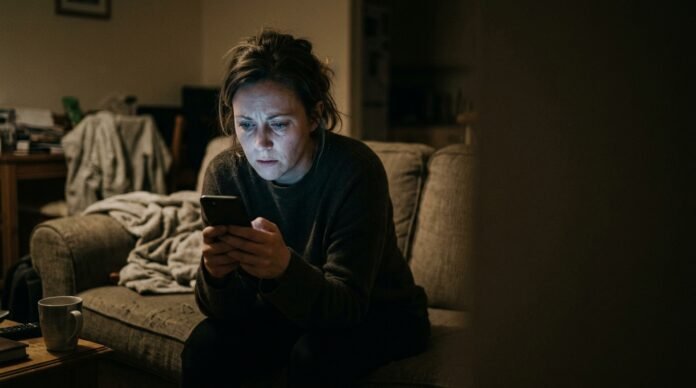
It started with a twinge in your side three days ago. You looked it up, and the search results ranged from “probably nothing” to something with a five-year survival rate. Since then you’ve checked the spot maybe forty times, pressed on it to see if it still hurts, taken your pulse, read seven forums, and half-decided to book a doctor, then un-decided, then re-decided. Some part of you knows this is probably anxiety. And yet here you are, and it’s very possible you found this article by searching a symptom right now.
If that’s you, take a breath. We’re going to do something slightly unusual here. This article will not tell you whether you’re sick, and it won’t reassure you that you’re fine, because if health anxiety is what’s happening, more reassurance is precisely the thing that keeps it going. Instead, we’re going to look honestly at the machine you’re caught in, why checking makes it worse rather than better, and what actually helps. That’s more useful to you right now than one more “you’re probably okay.”
What health anxiety actually is
Health anxiety is a preoccupation with the fear of having or developing a serious illness, driven by the misinterpretation of normal or benign bodily sensations as signs of something grave. A headache becomes a tumor. A skipped heartbeat becomes cardiac disease. A patch of fatigue becomes something terminal.
A quick note on names, because they matter. The old term was “hypochondria,” which has become a dismissive, almost mocking word, as if the person were faking or foolish. Clinicians have largely moved past it. In the current diagnostic manual, the DSM-5, the relevant diagnoses are illness anxiety disorder, where the fear exists with few or no physical symptoms, and somatic symptom disorder, where distressing physical symptoms are present. We’ll use “health anxiety” as the everyday umbrella term, and we’ll drop “hypochondria” entirely, because the experience is real, common, and nothing to be ashamed of.
This is genuinely widespread, and it exists on a spectrum. Plenty of people who would never meet a clinical threshold still recognize the pull of the checking spiral. You are not an oddity.
The reassurance loop: why checking makes it worse
Here is the engine of health anxiety, and understanding it is the single most useful thing on this page. It’s a loop, and it runs like this.
You notice a sensation. You interpret it as a possible sign of serious illness, and anxiety spikes. To relieve that anxiety, you check: you inspect the body part, you take your pulse, you search online, you ask a partner “does this look okay to you,” you book an appointment. And it works. For a moment, you feel relief. The doctor says it’s fine, the forum says it’s common, the spot looks normal today.
But the relief is temporary, and that’s the trap. Because you got relief from checking, your brain learns that checking is what made you safe. So the next time the doubt creeps back, and it always does, the urge to check is a little stronger. Over time, the reassurance stops lasting as long, the checking increases, and the doubt deepens. Clinical sources are blunt about this: seeking reassurance maintains health anxiety rather than resolving it (ADAA). The thing that feels like the solution is the fuel.
This is why you can get a clean scan and feel calm for a day, then find yourself right back in the doubt. The scan didn’t fail. The loop simply did what loops do.
Cyberchondria: the symptom-search spiral
The internet has supercharged this. Searching your symptoms, sometimes called cyberchondria, is one of the most common checking behaviors, and one of the most damaging, because search engines are structurally biased toward the alarming. Type in almost any benign symptom and, alongside the reasonable explanations, you’ll find the rare and terrible one, described in vivid detail.
The loop then tightens: the frightening result spikes your anxiety, which drives more searching, which surfaces more frightening results. An hour disappears. You end up more convinced and more frightened than when you started, having “researched” your way deeper into the fear rather than out of it. If your mind tends to lock onto a worry and grind, our guide on how to stop overthinking looks at that broader pattern.
The wearable problem
There’s a newer twist worth naming. Wearables and health apps now stream a constant feed of data: heart rate, heart rate variability, blood oxygen, sleep scores, the occasional ominous notification. For most people this is neutral or even useful. For a health-anxious brain, it can become an endless supply of checkable numbers, each one a fresh opportunity to notice a fluctuation and interpret it as a threat.
A resting heart rate that ticks up five beats, a “low” overnight oxygen reading, an irregular-rhythm alert that’s almost always benign, each can launch the loop. If checking a device has become part of your reassurance ritual, that’s worth noticing honestly. The data isn’t the problem. What the anxious mind does with it is.
The genuine tightrope: vigilance versus anxiety
Here’s where honesty matters most, because it would be irresponsible to tell you to simply ignore your body. Real illnesses exist, and appropriate medical attention saves lives. New, severe, persistent, or unusual symptoms genuinely do warrant a doctor’s evaluation, every time. Our head-to-toe guide to the physical symptoms of anxiety makes the same point: anxiety should only be considered the explanation after real causes have been ruled out by a professional.
So the goal is not to stop caring about your health. The distinction is between vigilance and anxiety. Reasonable vigilance is checking something concerning once, getting it evaluated if warranted, and then being able to move on. Health anxiety is the checking that never resolves, the reassurance that never sticks, the appointment that calms you for a day before the doubt returns. One protects your health. The other consumes your life while rarely making you any safer. And worth naming: for some people health anxiety flips into avoidance, being too frightened to see a doctor at all, which carries its own real risk.
What actually helps
The evidence here is clear and encouraging. The most strongly supported treatment for health anxiety is cognitive behavioral therapy (Current Psychiatry Reports, 2024). It’s chronic when untreated, but it responds well to the right approach.
CBT for health anxiety works precisely by targeting the loop. Rather than offering more reassurance, it helps you gradually reduce the checking and reassurance-seeking, and learn to tolerate the uncertainty that drives them. This is the logic of exposure and response prevention: you allow the anxious thought to be present without performing the checking ritual that normally follows, and over time your brain learns that the uncertainty is survivable and the catastrophe doesn’t come. It is counterintuitive, and it works, because it breaks the loop at the exact point where reassurance would normally feed it.
You don’t have to do this alone or figure out the technique from an article. This is what trained therapists do, and it’s worth understanding the different types of therapy so you can find the right fit. If you’re weighing whether it’s time, our guide to the signs you might need therapy can help.
One small, honest thing you can try today, though: notice the urge to check, and see if you can let it exist for ten minutes without acting on it. Not forever. Just ten minutes. That small gap, between the urge and the action, is where recovery lives.
The takeaway
Health anxiety isn’t a character flaw, and it isn’t you being dramatic or foolish. It’s a self-reinforcing loop that hijacks something healthy, your instinct to protect your body, and turns it against you. The cruel logic is that the very thing that promises relief, checking and reassurance, is what keeps the fear alive. Every check buys a moment of calm and charges the interest on the next spike of doubt.
The way out isn’t more certainty, because certainty is the one thing the loop can never give you. It’s learning, slowly and with support, to tolerate not knowing, to check less, and to let a sensation be just a sensation. That’s genuinely hard, and it’s genuinely doable, and people do it all the time. If you found this page mid-spiral, the most caring thing you can do isn’t one more search. It’s to close the tab and, if this is a pattern, to talk to someone trained to help you step out of the loop for good.
Checking is one behaviour inside a wider pattern. Our complete guide to health anxiety covers the whole of it, including the reassurance cycle that keeps the fear running.
Ready to step out of the loop?
Health anxiety responds well to the right kind of support. Learn about the therapy approaches that target the checking cycle, and the signs it might be time to reach out. You don’t have to research your way out of this alone.
Frequently asked questions
Is health anxiety the same as hypochondria?
Essentially yes, but the terminology has changed for good reason. “Hypochondria” is an older, now somewhat dismissive term. In the current diagnostic manual (DSM-5), the relevant conditions are illness anxiety disorder, where the fear occurs with few or no physical symptoms, and somatic symptom disorder, where distressing physical symptoms are present. “Health anxiety” is the common umbrella term. The shift away from “hypochondria” reflects that this is a real, treatable condition, not someone imagining things or seeking attention.
Why doesn’t reassurance make health anxiety better?
Because reassurance provides only temporary relief, and that relief is the trap. When checking or getting reassured lowers your anxiety, your brain learns that checking is what keeps you safe, so the urge to check returns stronger next time. Clinical research is clear that reassurance-seeking maintains health anxiety rather than resolving it. This is why a clean medical test can calm you for a day before the doubt creeps back. The loop, not the test result, is the problem.
Is it health anxiety, or should I actually see a doctor?
Both can be true, and the distinction is about pattern, not a single symptom. New, severe, persistent, or unusual symptoms genuinely warrant medical evaluation, every time. Health anxiety is the pattern of checking that never resolves, reassurance that never sticks, and worry that returns no matter how many times you’re told you’re fine. If you’re caught in repeated checking and reassurance-seeking that consumes your time without ever settling, that pattern itself is worth addressing, ideally with a professional. This article can’t diagnose you.
Does googling symptoms make health anxiety worse?
For anxious individuals, usually yes. Symptom-searching, sometimes called cyberchondria, tends to worsen the cycle because search results are biased toward the alarming: almost any benign symptom will surface a rare, frightening explanation. That spike drives more searching, which surfaces more frightening results, tightening the loop. Many people end a search session more convinced and more frightened than when they began, having reinforced the fear rather than resolved it.
Can health anxiety be treated?
Yes, and the outlook is encouraging. The most evidence-supported treatment is cognitive behavioral therapy, which works by helping you gradually reduce checking and reassurance-seeking and build tolerance for uncertainty, breaking the loop at its source. Health anxiety tends to be chronic when left untreated, but it responds well when addressed. Many people significantly reduce its grip on their lives with the right support.
Sources
- Anxiety & Depression Association of America. Health Anxiety (Illness Anxiety Disorder).
- Scarella TM, Boland RJ, Barsky AJ, et al. Illness Anxiety Disorder: A Review of the Current Research and Future Directions. Current Psychiatry Reports. 2024.
- Axelsson E, Hedman-Lagerlöf E, et al. Cognitive behavioral model of illness anxiety and reassurance-seeking. Frontiers in Psychiatry. 2019.
- American Psychiatric Association. Diagnostic and Statistical Manual of Mental Disorders, 5th ed. (DSM-5): Illness Anxiety Disorder and Somatic Symptom Disorder.
Disclaimer: This article is for educational and informational purposes only and is not a substitute for professional medical or mental health advice, diagnosis, or treatment. It cannot tell you whether any symptom you are experiencing is or isn’t serious, and it cannot diagnose health anxiety or any condition. New, severe, persistent, or unusual physical symptoms should always be evaluated by a qualified medical professional. Always seek the advice of a qualified physician or mental health professional with any questions you may have. Never disregard professional medical advice or delay seeking it because of something you have read here.
If you’re struggling or in crisis
US: Call or text 988 (Suicide & Crisis Lifeline), 24/7, free and confidential.
UK & ROI: Call 116 123 (Samaritans), free, 24/7.
International: Find a helpline at findahelpline.com.
