Key Takeaways
- The comforting idea that grieving in advance softens the loss later is not supported. A systematic review found no protective effect.
- What did help was preparedness, which is a different thing: understanding what’s coming, not feeling the loss early.
- The concept itself is unusually shaky. One review found more than 18 terms and over 30 definitions for grief before a death.
- High grief plus low preparedness during caregiving predicted worse bereavement outcomes, including complicated grief.
- It isn’t anticipatory anxiety. One is dread of an event, the other is mourning a person who is still here.
If you’re struggling right now, support is available and it works. US: call or text 988. UK: Samaritans on 116 123. More resources at the end of this article.
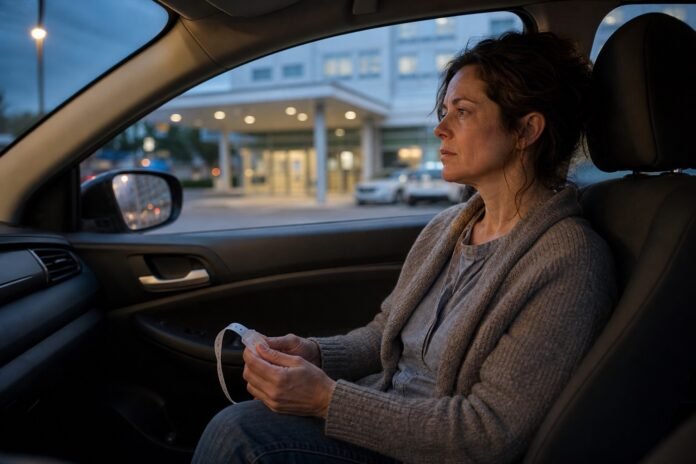
You sat in the hospital car park for twenty minutes before driving home, which is becoming the pattern. He’s still here. He knew who you were today, mostly, and there was a stretch in the middle where the conversation felt almost normal.
And you cried on the way back, again, for a man who is alive and forty minutes behind you. Someone told you this is anticipatory grief and that it’s useful, because you’re getting some of the grieving done now.
The first half of that is a real phenomenon. The second half is the part the evidence doesn’t support, and it’s worth knowing before you organise your next few months around it.
Where the term came from
Erich Lindemann coined anticipatory grief in 1944, in a paper that became one of the most cited in psychiatry, written after he studied survivors and bereaved relatives following a catastrophic fire in Boston (Lindemann, 1944).
The observation that produced the term is odd enough to be worth knowing. Lindemann described wives who had grieved husbands away at war and then, when the men returned alive, struggled to reconnect with them. He read that as grief work completed in advance, leaving nothing to reattach to.
So the concept was born from a case where anticipating a death appeared to cause a problem, not solve one. The popular version, that grieving early gets some of it out of the way, arrived later and travelled a great deal further than the evidence behind it.
The concept is shakier than it sounds
Before the evidence on whether it helps, there’s a prior issue: the field cannot agree on what it is.
Reviews of grief before a death have identified more than 18 different terms for it, including pre-death grief, caregiver grief and chronic sorrow, along with over 30 distinct definitions.
That’s not a footnote. When a concept has thirty definitions, studies claiming to measure it aren’t necessarily measuring the same thing, which makes the literature harder to interpret and any confident claim about it worth examining.
What people actually report is consistent enough, though: sadness, dread, exhaustion, and the disorienting experience of mourning someone who is in the next room. The uncertainty is about what to call it and what it does, not about whether people feel it.
The claim that doesn’t hold up
Here’s the finding that should change how you think about this.
Nielsen and colleagues systematically reviewed caregiver studies spanning end-of-life caregiving and the bereavement that followed, specifically to test whether grief before the loss improved outcomes afterwards. The assumption that grief work before the loss would ease bereavement was not confirmed (Nielsen et al., 2016).
Worse than neutral, in fact. High levels of grief during caregiving, combined with low preparedness, were associated with poor bereavement outcomes including complicated grief.
So the reassurance you’ve been offered has it backwards. Grieving hard in advance is not a deposit against future pain. If anything, distress before the death predicts distress after it, which makes sense once you stop thinking of grief as a fixed quantity that can be paid off early.
That’s worth saying plainly because a lot of people are enduring the present on the strength of a promise about the future that nobody can keep.
What did help
The same review found something that did predict better outcomes, and it isn’t grief.
High preparedness was associated with improved caregiver outcomes (Nielsen et al., 2016). Preparedness means understanding what’s happening and what’s likely to come: the trajectory of the illness, what the final weeks may look like, what decisions will need making, what practical and legal matters are outstanding.
Notice how different that is from grieving early. Preparedness is informational and practical. It’s asking the consultant what the next six months typically involve, finding out what the person would want, knowing who to call at 3am.
This distinction matters because the two get conflated constantly, and only one of them is supported. If you want to do something now that plausibly helps later, the evidence points at getting informed rather than at feeling it all in advance.
It isn’t anticipatory anxiety
Two things that sound similar get muddled here, and separating them tells you which problem you’re solving.
Anticipatory anxiety is dread of a future event. It’s oriented towards something that hasn’t happened, it usually involves prediction and catastrophising, and it typically responds to approaches that target the anxiety itself.
Anticipatory grief is oriented towards a person. It’s mourning attributes and shared experiences that are already gone, or going. It isn’t primarily about the future event at all.
That second point is the one people miss. Much of what gets labelled anticipatory grief isn’t about the death at all. It’s grief for losses that have already happened: the conversations you no longer have, the person who no longer recognises the joke, the relationship as it was. Those aren’t anticipated. They’re current.
The dementia version
This is where the phenomenon is most studied and most distinctive, because the losses arrive in instalments over years.
With a progressive dementia, the person is present and the relationship is not, and that combination produces something people find almost impossible to describe to others. You are simultaneously caring for someone daily and bereaved of them. There’s no vocabulary for that and no social role that matches it.
Research on caregivers in this situation consistently links this pre-death grief with depressive symptoms, and it tends to intensify as the illness progresses rather than easing with familiarity.
The practical implication is one most caregivers resist: your own support is not a luxury to be arranged after the caregiving ends. The evidence says the distress during is connected to the distress afterwards, which makes support during the caregiving the intervention rather than the indulgence.
Why the ending often lands harder than expected
People who have been in this for years frequently describe being blindsided by the death itself, and they tend to treat that as evidence they did something wrong.
It follows directly from the finding above. If grieving early doesn’t discharge grief, then arriving at the death having felt a great deal beforehand doesn’t mean arriving with less left. The expectation of a softened landing was never warranted, so the impact isn’t a failure of preparation.
There’s a second thing that catches people out. The caregiving stops overnight. Whatever else it was, it structured the day, supplied a role, and made the phone ring. Losing the person and losing the entire architecture of your daily life on the same afternoon is two losses, and only one of them gets condolences.
Some people also describe relief arriving first and grief arriving weeks later, which is disorienting and prompts a lot of private self-accusation. Relief after a long illness is ordinary. It’s a response to the ending of suffering and of exhaustion, and it doesn’t displace the grief so much as arrive before it.
None of this is a reason to brace harder now. It’s a reason to expect that support will still be needed afterwards, rather than assuming the long lead-in has already done that work.
The guilt of grieving someone still here
Almost everyone in this position carries a private version of the same worry, so it’s worth naming.
Grieving a living person can feel like a betrayal, or like giving up on them, or like wishing it over. Some people report the specific horror of catching themselves hoping it will end soon, then being unable to tell anyone.
None of that means what people fear it means. Wanting an ending is usually about wanting the suffering to stop, both theirs and yours, and it coexists comfortably with love rather than contradicting it. Exhaustion produces that thought reliably in people who are doing everything right.
There’s also the isolation. Nobody sends cards for a loss that hasn’t formally occurred, and there’s no funeral for a relationship that ended while the person continued. Kenneth Doka’s idea of disenfranchised grief, grief that isn’t openly acknowledged or socially supported, fits this situation as well as it fits any.
What helps
Get informed rather than getting ahead. Ask the clinical team what the likely trajectory is, what the last phase typically involves, what decisions are coming. That’s the thing the evidence actually supports.
Name the losses that have already happened. A great deal of this pain is grief for things that are genuinely gone, and treating it as anticipation of a future event misfiles it. You’re allowed to mourn the conversations now.
Get your own support during, not after. Carer support groups exist precisely because this is a recognised and specific burden, and the timing matters given what the research says about distress during predicting distress after.
Protect something that is yours. Caregiving expands to fill everything available, and the people who cope least well are usually the ones who have nothing left that isn’t the illness.
And if you want professional support, this is a legitimate reason for it. Our guide to finding the right therapist covers the search; asking about experience with caregivers or bereavement is worth doing directly.
When to get help sooner
Some markers shouldn’t wait until after the death, which is when most people assume support becomes available.
Any thought of ending your life, including the passive version. Being unable to function outside the caregiving role. Drinking that’s escalating. Symptoms that have persisted for months and aren’t shifting between better and worse days.
Those warrant same-week attention or a crisis line today. Caregiver distress is a well-documented risk in its own right, and the fact that it has an obvious external cause makes it more explicable rather than less serious.
After the death, if grief stays at full intensity and stops reorganising over a long period, that’s a separate picture worth knowing about. Our guide to prolonged grief disorder covers what the diagnosis requires and why the criteria are contested.
The takeaway
What you’re experiencing in the car park is real and well documented, and it deserves a better account than the one you’ve been given.
The comfort you were offered, that this counts towards the grief and leaves less for later, doesn’t survive contact with the evidence. Grief before a death doesn’t reliably protect against grief after it, and high distress during caregiving predicts a harder bereavement rather than an easier one. That sounds discouraging until you notice what it implies: your distress now is not a job you’re getting done, so there’s no reason to endure it unsupported.
What does appear to help is preparedness, which you can act on. Understand what’s coming. Grieve the parts that have already gone. Get support while it’s happening rather than saving it for afterwards.
He’s still forty minutes behind you, and some of him is already gone. Both of those are true, and you’re allowed to feel the second one without it meaning you’ve given up on the first.
Carrying this alone? Grief before a death is a recognised reason to seek support, and it doesn’t require waiting until afterwards to qualify. Our guide to recognising when therapy is worth considering is a reasonable starting point.
Frequently asked questions
What is anticipatory grief?
It’s grief experienced before a death, usually while caring for someone with a terminal or progressive illness. The term was coined by Erich Lindemann in 1944. Worth knowing that the concept is contested: reviews have found more than 18 terms and over 30 definitions for grief before a death, so studies claiming to measure it aren’t always measuring the same thing. What people report is consistent enough, even if the label isn’t.
Does grieving in advance make the loss easier afterwards?
The evidence says no. A systematic review of caregiver studies spanning caregiving and bereavement specifically tested whether grief work before the loss improved outcomes afterwards, and that assumption was not confirmed. High grief during caregiving combined with low preparedness was associated with poor bereavement outcomes including complicated grief. Grief doesn’t appear to be a fixed quantity you can pay down early.
If grieving early doesn’t help, what does?
Preparedness, which the same review found was associated with improved caregiver outcomes. That means understanding the likely trajectory of the illness, what the final phase typically involves, what decisions are coming, and what the person would want. It’s informational and practical rather than emotional, and it’s frequently confused with grieving early even though only one of the two has evidence behind it.
Is it normal to grieve someone who is still alive?
Yes, and much of it isn’t anticipation at all. A great deal of what gets called anticipatory grief is grief for losses that have already happened: conversations you no longer have, a relationship that has changed, a person who no longer recognises a shared joke. Those are current losses rather than future ones, and treating them as anticipation of a death misfiles what you’re actually mourning.
Is anticipatory grief the same as anticipatory anxiety?
No, though they’re easily confused. Anticipatory anxiety is dread of a future event, typically involving prediction and catastrophising about what will happen. Anticipatory grief is oriented towards a person rather than an event, and is largely about attributes and shared experiences that are already gone. They can occur together, but they respond to different approaches, so it’s worth knowing which one is dominating.
Sources
- American Psychiatric Association. (2022). Diagnostic and Statistical Manual of Mental Disorders (5th ed., text revision). Prolonged grief disorder.
- Doka, K. J. (1989). Disenfranchised Grief: Recognizing Hidden Sorrow. Lexington Books.
- Lindemann, E. (1944). Symptomatology and management of acute grief. American Journal of Psychiatry, 101(2), 141–148.
- National Institute of Mental Health. Caregiver mental health and coping with grief.
- Nielsen, M. K., Neergaard, M. A., Jensen, A. B., et al. (2016). Do we need to change our understanding of anticipatory grief in caregivers? A systematic review of caregiver studies during end-of-life caregiving and bereavement. Clinical Psychology Review, 44, 75–93.
- World Health Organization. International Classification of Diseases (11th revision). Prolonged grief disorder.
Medical disclaimer: This article is for informational purposes only and is not a substitute for professional medical advice, diagnosis, or treatment. The Psych Nerd is not a licensed clinical practice. Always seek the advice of a qualified health provider with any questions about a medical or mental health condition.
If you’re in crisis: In the US, call or text 988 (Suicide & Crisis Lifeline). In the UK, call 116 123 (Samaritans). Elsewhere, findahelpline.com lists country-specific services. Many countries also run dedicated carer support lines.
