Key Takeaways
- A panic attack is a sudden surge of intense fear that peaks within about 10 minutes, with physical symptoms so strong they mimic a heart attack.
- Panic attacks are common, affecting as much as 11% of people in a single year, and are not physically dangerous despite how they feel (Merck Manual).
- A panic attack is not the same as panic disorder: the disorder (2–3% of adults yearly) means recurring attacks plus ongoing fear of the next one.
- The engine is a “fear of fear” cycle: misreading harmless body sensations as catastrophic, which fuels more panic.
- Panic responds very well to treatment, especially CBT, and many people recover without any treatment at all.
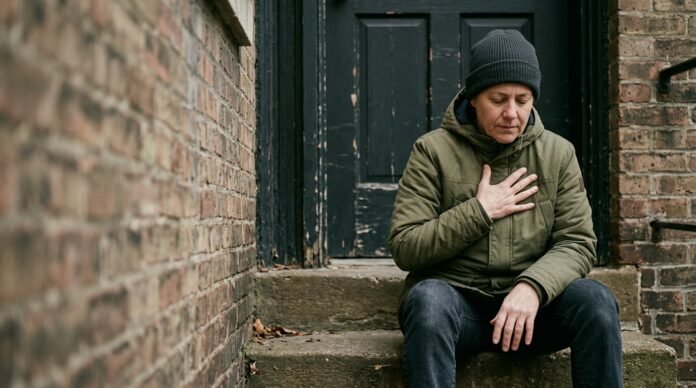
It comes out of nowhere. One second you’re fine, in a supermarket, on a train, on your sofa, and the next your heart is slamming, you can’t get a full breath, the room feels unreal, and you are suddenly, completely certain that you are dying or losing your mind. Your body is screaming emergency with everything it has. And then, ten or twenty minutes later, it passes, leaving you shaken, exhausted, and terrified it will happen again. If you’ve been to an emergency room convinced you were having a heart attack, only to be told your heart is fine, you already know this particular kind of fear.
That’s a panic attack, and it is one of the most physically terrifying experiences in all of mental health, precisely because it hijacks your body so convincingly. The good news, and there is genuinely good news here, is that panic attacks are extremely well understood, not dangerous despite how they feel, and highly treatable. This guide covers what’s actually happening in your body, why it happens, the crucial difference between a panic attack and panic disorder, and what genuinely helps.
What a panic attack actually is
Clinically, a panic attack is an abrupt surge of intense fear or discomfort that reaches a peak within minutes, typically around 10, accompanied by at least four of a specific set of physical and cognitive symptoms. Those symptoms include a pounding or racing heart, sweating, trembling, shortness of breath or a smothering feeling, a choking sensation, chest pain, nausea, dizziness, chills or hot flushes, numbness or tingling, feelings of unreality or detachment (derealization/depersonalization), a fear of losing control or “going crazy,” and a fear of dying.
That list explains why panic attacks are so often mistaken for medical emergencies. The most common symptom is heart palpitations, and combined with chest pain and breathlessness, it’s no wonder so many people end up in the emergency department fearing a heart attack. The sensations are real and intense. What they are not is dangerous.
Panic attack vs. panic disorder: an important difference
This distinction matters enormously, because confusing the two causes needless fear. A panic attack is a single episode. Panic disorder is a diagnosable condition defined by recurrent, unexpected panic attacks followed by at least a month of persistent worry about having more, or by significant changes in behavior to avoid them.
The numbers show how different they are. Panic attacks are common, affecting as much as 11% of the population in a single year. Panic disorder is much rarer, affecting roughly 2 to 3% of adults in a given year. In other words, having a panic attack is a relatively ordinary human experience, and most people who have one recover without treatment and never develop the disorder. Having one attack does not mean you have panic disorder, and it does not mean you’re destined for more. For a fuller breakdown, see our guide on panic attacks vs. anxiety attacks, two terms that are often muddled.
The fear-of-fear cycle: why panic feeds itself
Here’s the mechanism at the heart of panic, and understanding it is genuinely part of the treatment. Panic runs on a “fear of fear” loop. It usually starts with a harmless bodily sensation, a skipped heartbeat, a wave of dizziness, a slightly fast pulse from caffeine or stairs. In someone prone to panic, that sensation gets misinterpreted as dangerous: “Something is wrong. Is this a heart attack?”
That catastrophic thought triggers the body’s alarm system, releasing adrenaline, which intensifies the very sensations that scared you: the heart pounds harder, breathing quickens, dizziness grows. Those stronger sensations “confirm” the danger, which ramps up the fear further, which releases more adrenaline. Round and round it spirals, in seconds, into a full-blown attack. The panic isn’t a response to a real external threat. It’s your alarm system reacting to itself, a fire alarm set off by its own smoke.
Why this understanding helps
Grasping the fear-of-fear cycle changes everything, because it reveals the exit. If panic is fueled by interpreting sensations as catastrophic, then learning that those sensations are uncomfortable but harmless takes the fuel away. You cannot be spiraled into panic by a racing heart you genuinely believe is safe. This is exactly why the most effective treatments work by changing your relationship to the physical sensations rather than trying to suppress them.
It also explains why fighting a panic attack tends to make it worse (fighting is a form of fear) while riding it out, accepting the sensations without adding catastrophic meaning, lets it pass. Every panic attack ends. Your body physically cannot sustain the adrenaline surge indefinitely; the parasympathetic system eventually brings you back down. Knowing that, in the moment, is a real anchor.
What to do during a panic attack
In the moment, the goal is not to stop the attack by force but to stop feeding it. A few evidence-aligned approaches: remind yourself explicitly that this is a panic attack, that it is not dangerous, and that it will pass. Slow your breathing, especially a longer exhale, which activates the body’s calming response and counters the over-breathing that worsens dizziness. Drop the resistance, let the wave rise and fall rather than bracing against it. And avoid fleeing the situation if you can, because escaping teaches your brain the situation was dangerous and makes the next attack more likely.
If your experience tips into feeling like a total collapse or shutdown rather than a discrete surge, our guide on what a mental breakdown actually is covers how that differs and what it signals.
What actually helps long-term
Panic is one of the most treatable anxiety problems. Cognitive Behavioral Therapy (CBT) is the gold-standard psychotherapy, and it directly targets the fear-of-fear cycle: identifying and challenging the catastrophic misinterpretations, and using interoceptive exposure, deliberately and safely bringing on the feared sensations (like spinning to feel dizzy, or breathing fast) so you learn, viscerally, that they’re harmless. This is remarkably effective because it dismantles the cycle at its root.
Medication is also used for panic disorder and is a conversation to have with a doctor. It’s worth knowing that clinical guidelines generally do not recommend benzodiazepines as a first-line or long-term treatment, given the risks, but that’s a decision for you and a qualified prescriber, not something to navigate from an article. The throughline of effective help is learning that the sensations, however awful, cannot hurt you, and that the alarm can be recalibrated.
The takeaway
A panic attack is your body’s alarm system firing at full volume with no real fire, a terrifying, convincing, but fundamentally harmless surge that peaks and passes within minutes. It feels like dying or going crazy; it is neither. And crucially, a single panic attack, or even several, is not the same as panic disorder, and most people who experience panic recover without treatment.
What makes panic so treatable is that its engine, the fear of its own sensations, is something you can genuinely rewire. When you stop interpreting a racing heart as a catastrophe, you starve the cycle of its fuel. That’s not willpower or positive thinking; it’s a specific, learnable shift that therapy is very good at teaching. The alarm can be turned down. Most people who get the right help get their life back, no longer organizing it around the fear of the next attack.
Panic is one presentation among several, and our complete guide to anxiety sets it alongside the others. If the attacks are shaping what you will and will not do, the signs it is worth getting help covers where that line usually sits.
You can learn to turn the alarm down
Panic responds exceptionally well to CBT, which teaches you to break the fear-of-fear cycle rather than just endure it. You don’t have to keep living in dread of the next attack. Online platforms like BetterHelp and Talkspace connect you with licensed therapists experienced in treating panic, often within days.
We may earn a commission if you sign up through these links, at no extra cost to you. We only recommend services we believe can genuinely help.
Frequently asked questions
What does a panic attack feel like?
A panic attack is a sudden surge of intense fear or discomfort that peaks within about 10 minutes. It typically involves a pounding or racing heart, shortness of breath, chest pain, sweating, trembling, dizziness, nausea, numbness or tingling, chills or hot flushes, and feelings of unreality or detachment, along with a powerful fear of dying, losing control, or “going crazy.” The sensations are very real and intense, which is why they’re often mistaken for a heart attack, but a panic attack is not physically dangerous.
Are panic attacks dangerous?
No. Despite feeling life-threatening, a panic attack is not physically dangerous. The symptoms are caused by a surge of adrenaline as part of the body’s fight-or-flight response, and your body cannot sustain that surge indefinitely, so every panic attack passes. Many people go to the emergency room fearing a heart attack; it’s always wise to rule out medical causes the first time, but once panic is identified, the reassurance that it can’t harm you is both true and part of the treatment.
What’s the difference between a panic attack and panic disorder?
A panic attack is a single episode of intense fear. Panic disorder is a diagnosable condition defined by recurrent, unexpected panic attacks followed by at least a month of persistent worry about having more, or by avoidance behavior to prevent them. Panic attacks are common (up to 11% of people in a year), while panic disorder is much rarer (about 2–3% yearly). Having a panic attack does not mean you have panic disorder, and most people who experience one recover without treatment.
What causes panic attacks?
Panic attacks are driven by a “fear of fear” cycle. A harmless bodily sensation (a fast heartbeat, dizziness) gets misinterpreted as dangerous, which triggers an adrenaline surge that intensifies the sensations, which seems to confirm the danger, spiraling into full panic. Underlying factors include genetics, temperament, stress, and sometimes stimulants like caffeine. The key insight is that panic is the alarm system reacting to its own signals, not to a real external threat.
How do you stop a panic attack?
In the moment, the goal is to stop feeding the attack rather than force it to stop. Remind yourself it’s a panic attack, it’s not dangerous, and it will pass. Slow your breathing with a longer exhale to counter over-breathing and activate the calming response. Accept the sensations rather than fighting them, since resistance is a form of fear that adds fuel. Try not to flee, as escaping reinforces the fear. Long-term, CBT, especially interoceptive exposure, is highly effective at breaking the cycle.
Sources
- Merck Manual Professional Edition. Panic Attacks and Panic Disorder (panic attacks ~11%/year; panic disorder 2–3%/year; most recover without treatment).
- Diagnostic and Statistical Manual of Mental Disorders, 5th ed., Text Revision (DSM-5-TR). Panic attack and panic disorder criteria (4+ of 13 symptoms; peak within minutes; ≥1 month of worry for disorder).
- StatPearls / NCBI Bookshelf. Panic Disorder (symptom list; disorder vs. attack; clinical presentation).
- American Family Physician. Generalized Anxiety Disorder and Panic Disorder in Adults (CBT and antidepressants effective; benzodiazepines not first-line).
- Clark DM. A cognitive approach to panic (the fear-of-fear cycle: catastrophic misinterpretation of bodily sensations). 1986. (Foundational cognitive model.)
Disclaimer: This article is for educational and informational purposes only and is not a substitute for professional medical or mental health advice, diagnosis, or treatment. It cannot diagnose panic disorder or any condition, and does not recommend or discourage any medication. If you experience symptoms like chest pain for the first time, seek medical evaluation to rule out physical causes. Always consult a qualified professional with any questions. Never disregard professional advice or delay seeking it because of something you have read here.
If you’re struggling or in crisis
US: Call or text 988 (Suicide & Crisis Lifeline), 24/7, free and confidential.
UK & ROI: Call 116 123 (Samaritans), free, 24/7.
International: Find a helpline at findahelpline.com.
